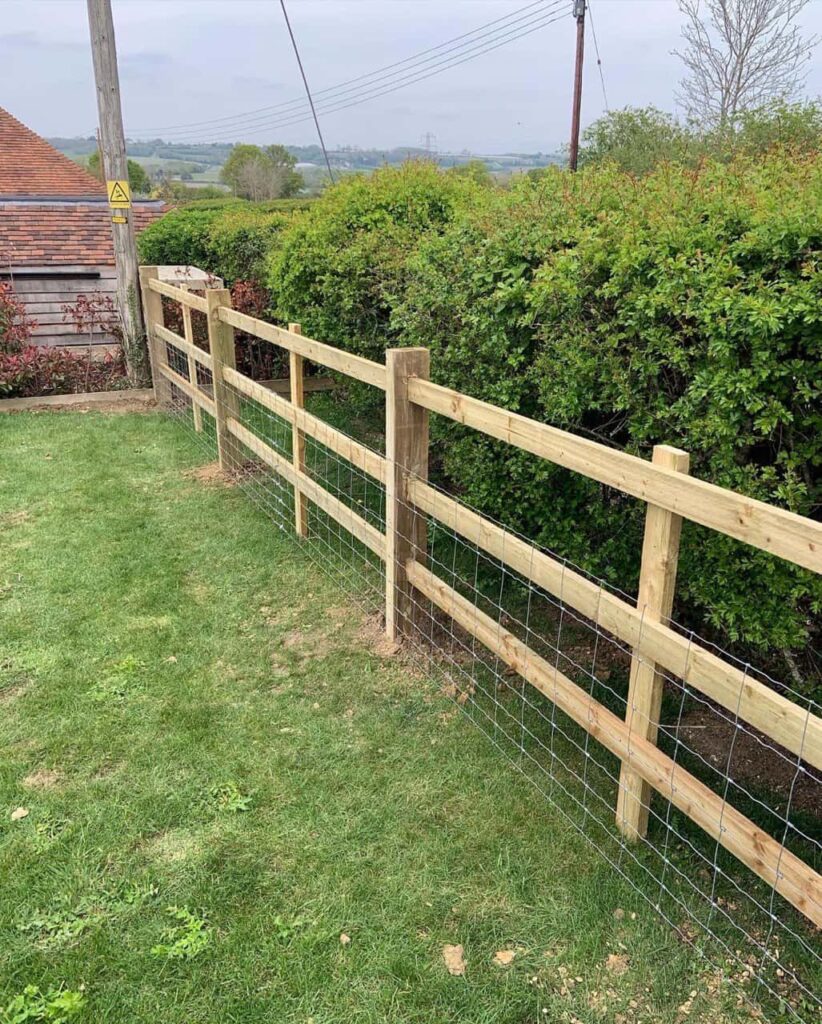
When Should Damaged Stock Fencing Be Repaired?
Stock fencing plays an important role in creating secure boundaries and controlling access across larger gardens, paddocks and other open areas. Although it is designed to withstand regular exposure to the elements, the wire, posts and fixings can deteriorate or become damaged over time.
Minor defects may appear manageable at first, but they often place additional strain on the surrounding fence. Arranging timely repairs can restore the boundary, prevent the damage from spreading and help the entire fence remain dependable.
Signs That Stock Fencing Needs Professional Repair
The Wire Has Become Loose or Sagging
Stock fencing relies on consistent tension to maintain its strength and shape. When the wire begins to sag, it can create gaps beneath or between sections of the mesh. This reduces the effectiveness of the boundary and makes the fence more vulnerable to further movement.
Loose wire may be caused by weakened fixings, movement in the posts or a loss of tension at the ends of the fence. Simply pulling one section tighter may not provide a lasting solution if the supporting structure has also deteriorated.
One or More Posts Are Leaning
A leaning post can affect a much wider section of stock fencing. As the post moves, it alters the tension across the wire and transfers additional pressure to neighbouring posts.
Movement may result from softened ground, decay, impact or an inadequate foundation. A professional repair should identify why the post has shifted before it is reset or replaced. Correcting the cause helps the repaired section remain stable.
The Wire Is Broken or Heavily Damaged
Broken wires should be repaired promptly because they can create openings and sharp, exposed ends. Damage may occur through impact, corrosion, falling branches or repeated pressure against the fence.
The appropriate repair depends on the extent and position of the damage. A small, isolated break may be repaired without renewing the entire fence, while a badly distorted section may require replacement between sound supporting posts.
Fixings Have Come Away From the Posts
Staples, clips and other fixings hold the fencing securely against its supports. If they loosen or pull free, the mesh can move independently of the posts and gradually lose its tension.
Missing fixings may appear to be a minor issue, but movement during windy conditions can enlarge the fixing points or damage the wire. Replacing unsuitable or failed fixings early can help protect the surrounding fence.
The Bottom of the Fence Has Lifted
Gaps beneath stock fencing can develop when the ground changes, posts move or the mesh is pushed upwards. These openings can make the boundary less effective and may encourage further distortion as pressure is applied to the unsupported wire.
The repair may involve restoring the wire tension, addressing ground movement or renewing the affected supports. The aim should be to achieve a secure lower edge without creating excessive strain elsewhere.
Corrosion Is Weakening the Mesh
Small areas of surface weathering do not always mean immediate failure, but significant corrosion can reduce the strength of the wire. Rusted strands may snap under pressure, particularly around joins, fixings and sections close to the ground.
If corrosion is limited to one part of the fence, a sectional repair may be possible. Widespread deterioration, however, can indicate that the mesh is no longer strong enough to provide a reliable boundary.
Damage Is Beginning to Spread
One damaged post or loose section can affect adjoining parts of the fence. As tension becomes uneven, other posts may lean, fixings can loosen and the mesh may start to buckle.
Repairing the original defect before this happens is usually more straightforward than restoring several connected sections. Regular visual checks are particularly useful after strong winds, ground disturbance or nearby garden work.
When Can a Localised Repair Be Effective?
A local repair may be suitable when:
- The damage is confined to a clearly defined section
- Most posts remain upright and secure
- The surrounding mesh retains its strength
- Corrosion is not widespread
- The fence line remains properly positioned
- The source of the damage can be corrected
A repair should restore more than the visible defect. Tension, post stability, fixings and alignment all need to work together if the fence is to perform correctly.
When Might Wider Replacement Be More Appropriate?
Repeated repairs may become less effective when the entire fence has deteriorated. Numerous leaning posts, extensive corrosion, badly stretched wire or widespread movement can indicate that isolated repairs will not restore dependable performance.
A professional assessment helps determine whether the fence can be preserved through targeted work or whether a longer section should be renewed. This avoids repeatedly addressing symptoms while the underlying condition continues to decline.
Why Professional Stock Fencing Repairs Matter
Stock fencing must be tensioned carefully and supported by suitably positioned posts. Excessive tension can pull posts out of alignment, while insufficient tension leaves the mesh loose and ineffective.
A professional contractor can inspect the complete fence line, locate connected weaknesses and complete repairs that integrate properly with the existing structure. This provides a neater result and helps prevent the same issue from returning prematurely.
Conclusion
Damaged stock fencing should be repaired when wires become loose or broken, posts begin leaning, fixings fail, gaps appear or corrosion starts weakening the mesh. Early attention can often preserve the unaffected sections and prevent a localised defect from spreading along the boundary.
Fast Fix Fencing Rochester provides professional stock fencing inspections and repairs in Rochester, Kent. If your fence is no longer secure, straight or properly tensioned, contact the team to arrange an assessment and discuss the most suitable repair.
Call us on: 01634 568 991
Click here to find out more about Fast Fix Fencing Rochester
Click here to complete our contact form and see how we can help with your fencing needs.